Shipyard Cranes
Shipyard cranes are large-scale lifting equipment specially designed for shipbuilding, repair, and dock operations, used for lifting ship sections, engines, propellers, and other heavy components. Their design must meet the needs of high-precision positioning, large-tonnage lifting, and complex spatial operations, and are one of the core equipment in the shipbuilding industry.
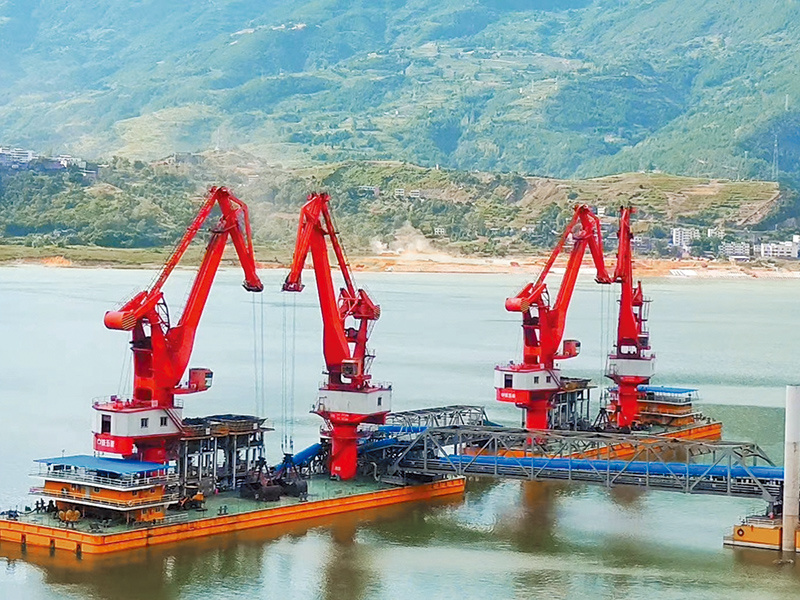
Floating Cranes refer to heavy-duty lifting equipment installed on floating vessels, combining the high-efficiency operation of portal cranes with the mobility advantages of floating platforms. Utilizing the floating vessel as their carrier, they move freely across water bodies, adapting to tidal variations, complex hydrological conditions, and environments without fixed docks, making them a core lifting solution for marine engineering projects.
View Details →
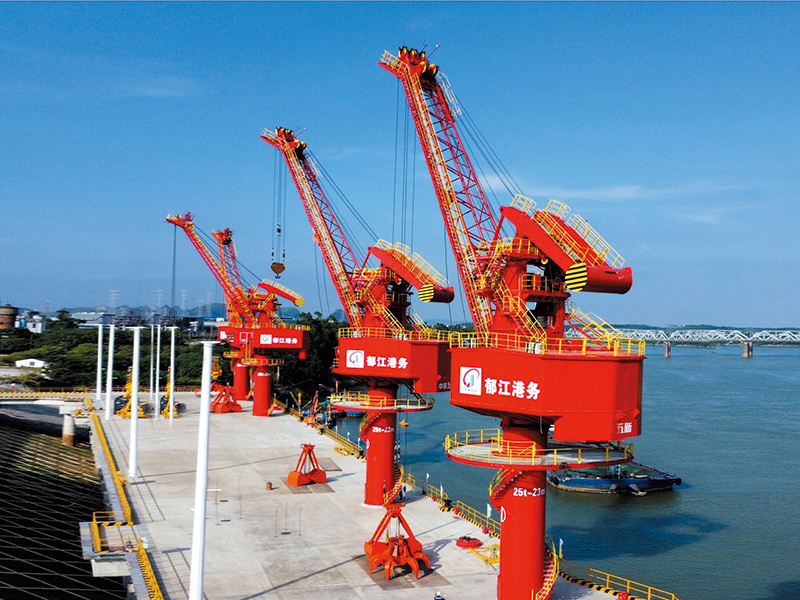
Fixed Cranes refer to jib cranes that are anchored to foundations or supported on bases, operating solely at fixed locations within ports. Compared to portal cranes in structure, they retain hoisting, luffing, and slewing functions but lack gantry travel mechanisms and portal frame structures in its metal construction. Their defining characteristic is operation confined to a fixed position, yet it offers simpler structural design and lower manufacturing costs.
View Details →
Ship-to-Shore Container Crane (STS)
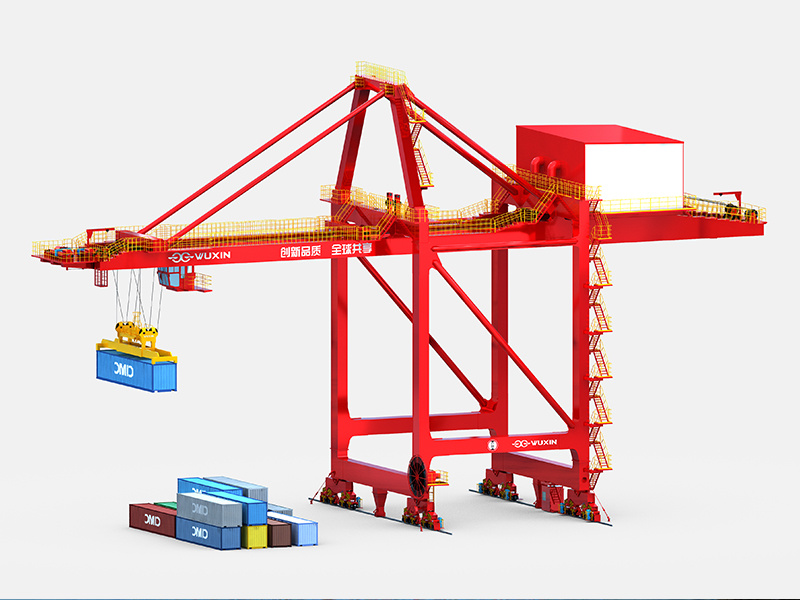
Ship-to-Shore Container Cranes (abbreviated as STS) refer to specialized equipment designed for high-efficiency container ship handling at port terminals. As a core asset in modern container hub ports, Wuxin’s STS achieve precise movement along the quayside via a steel-wheel rail travel mechanism and feature a multi-voltage compatible power system (380V–10kV) to adapt flexibly to diverse port grid infrastructures. With optimized operational design, their theoretical handling efficiency reaches 60 natural containers/hour. Wuxin STS comply with the latest GB, FEM, DIN, IEC, and AWS standards, offering safety, stability, customization, low maintenance costs, and energy efficiency.
View Details →